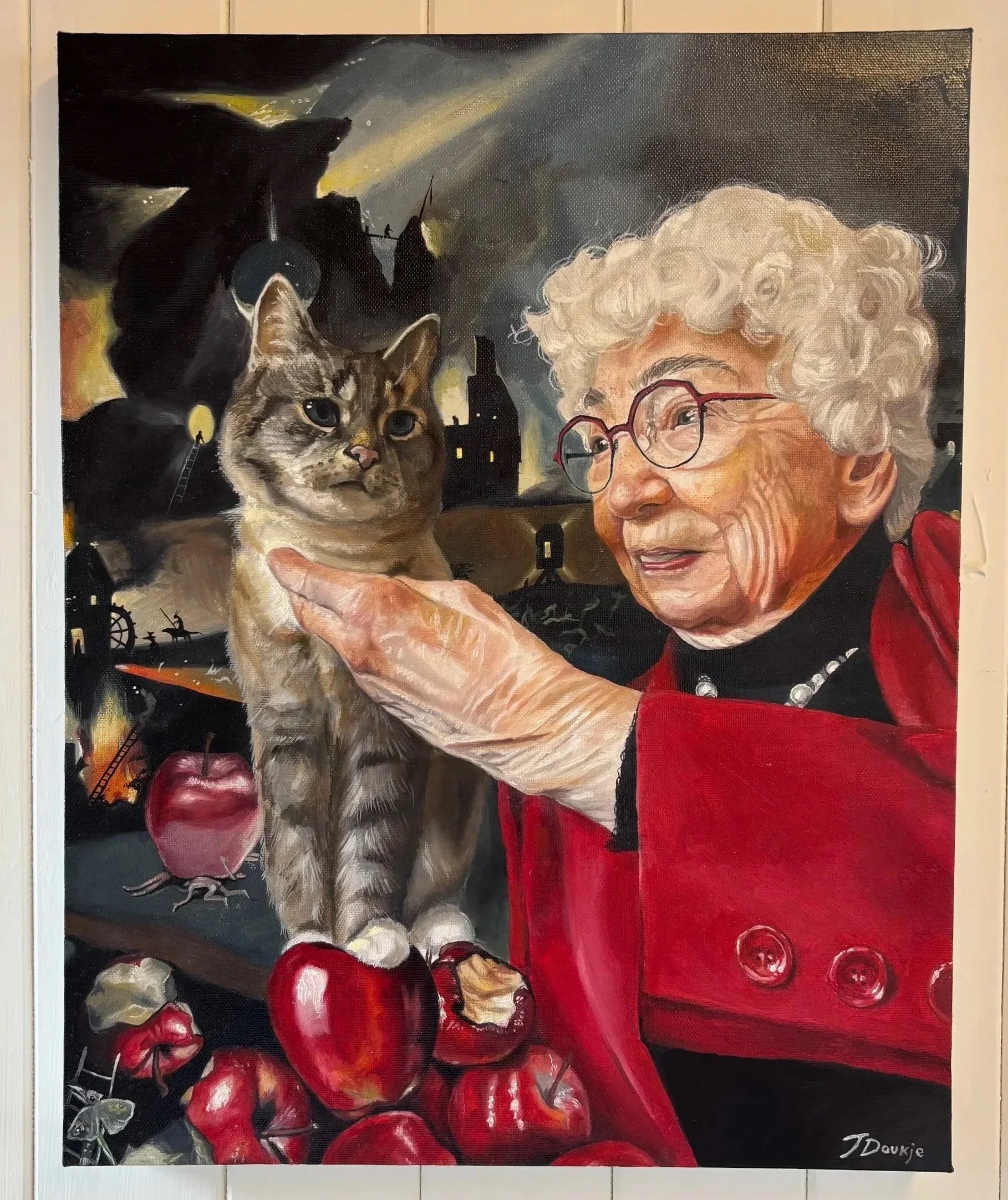
Adam’s Apple, 50 × 40 cm, oil on canvas 2026
In Adam’s Apple, the familiar iconography of the Fall is reconfigured through the figure of the artist’s grandmother: a woman who appears composed and self-possessed while the symbolic violence of inherited guilt unfolds around her.
The painting takes its title from the biblical and cultural association between the apple and the Fall, but deliberately shifts the point of accusation. If the apple has historically been used to locate female culpability, Adam’s Apple asks what happens when the symbol is returned to Adam. Why does the apple remain lodged in his throat? Why does the burden of an ancient narrative continue to fall upon the woman?
The hellscape in the background draws on Hieronymus Bosch’s The Garden of Earthly Delights, but its original figures and instruments of punishment have been transformed into apples; some bitten, others untouched. They tumble through the landscape and crush the human figures beneath them. The distinction between innocence and guilt becomes increasingly meaningless: whether bitten or whole, the apple has become an instrument of punishment in itself.
Against this scene, the grandmother calmly pets a cat positioned on top of a stack of apples. The gesture introduces a different register into the work. The cat, historically entangled with representations of femininity, sexuality, witchcraft and female unruliness, becomes here a figure of independence rather than temptation. It does not submit to the mythology of the Fall; it simply occupies the highest point of the pile.
The grandmother’s relationship to the cat is intimate and untroubled. She neither participates in the chaos nor attempts to escape it. Instead, she appears to have outlived the accusation.
Through this collision of biblical symbolism, Boschian imagery and personal portraiture, Adam’s Apple examines how stories of female guilt persist by repeatedly attaching themselves to objects, bodies and images. The bitten apple is no longer evidence of a transgression. It is evidence of how insistently we have needed one.